Having the bible as our rule of faith and practice, we cannot seek in another source the real meaning, as well as all the clues and instructions for identifying the church amid a world that increasingly calls itself “believer” and less differs from a dissolute life.
The Greek word translated as “church” means, literally, “called out” and thus refers to a group of people called to come out of sin in the world and serve the Lord. One cannot continue to live in sinfulness and be part of the church. (Malachi 3:18)
We find in the Bible that the Church is the body of Christ. (Ephesians 1:20 to 23, 1 Corinthians 12:27, Colossians 1:18 and 24)
Understanding the biblical concept of church as a body of people called out of sin, to be holy, helps us to appreciate the richness of the biblical description.
Now, we make the following reflection: Being the church the Body of Christ, how many bodies does Christ have? Ephesians 4:4 says that there is only one body.
We can then compare the church with the human body. And in this comparison we see that there is something in our organism that identifies the members of our body, the DNA.
DNA or DNA in Portuguese is the acronym for deoxyribonucleic acid, which is an organic compound whose molecules contain the genetic instructions that coordinate the development and functioning of all living beings. As a rule, the DNA of each individual is unique. It contains information to build and maintain an organism.
Understanding that the church is a body and that every body has its DNA, we can analyze what is the DNA of the church, because this way we identify all the members of this body, even though they are physically distant from each other, but united by the exclusive DNA of this body.
We find in Ephesians 2:19 and 20 that the foundation of the Church are the apostles and prophets, therefore, to know this foundation, we need to know what were the doctrines that the Apostles and Prophets preached.
To know if we are part of the Church of Christ, we need to answer what are the apostolic and prophetic doctrines, because all the members of the body are identified by the zeal and holiness expressed in the obedience of these doctrines that make up the genetic structure, the DNA of the Church.
Although our space here is small to describe in detail the entire structural and doctrinal composition that identifies the members of this body, I want only to highlight some points, putting ourselves at your disposal for further clarification in the light of the Holy Scriptures.
- Oneness of God (Pure Monotheism) – Ephesians 4:6, 1 Timothy 3:16.
- Baptism in the Name of the Lord Jesus and in running water – Acts 2:38, Acts 19:1 to 6.
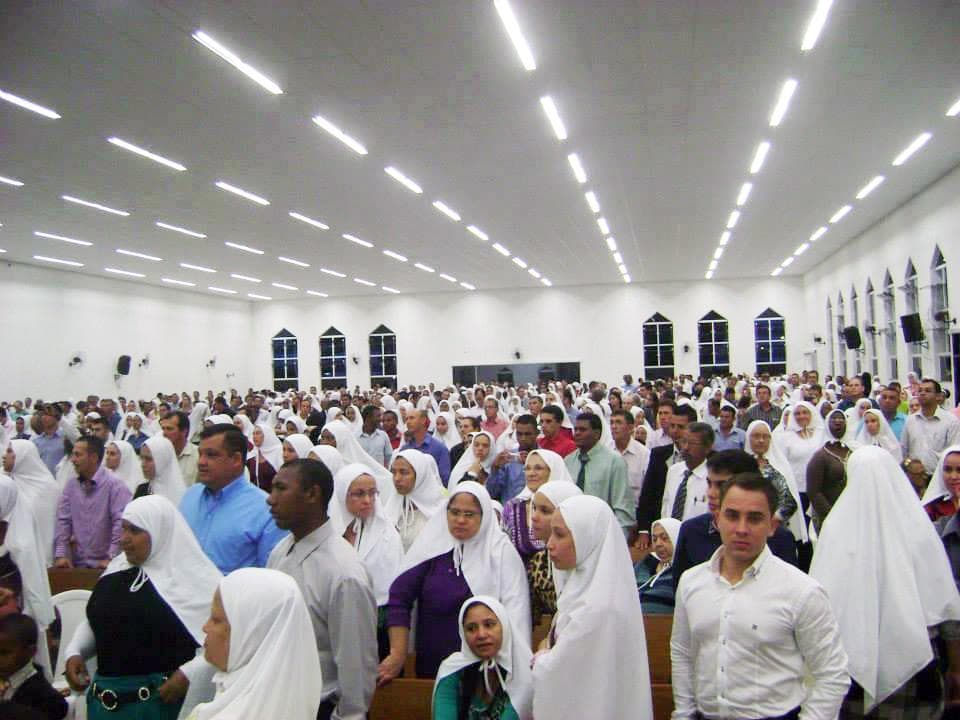
- Use of the veil by sisters to pray and prophesy – 1 Corinthians 11:1 to 16.
- Greeting with the peace of the Lord Jesus and holy kiss – Romans 16:16 to 18 and 1 Peter 5:14.
- Long garments, for women long skirt and long-sleeved blouse or long dress, and for men pants and long-sleeved shirt – Isaiah 49:18, 1 Timothy 2:9 to 14, 1 Peter 3:1 to 5.
- Fighting against the denominational system – Matthew 16:18, Ephesians 5:27.
- Annual supper with unleavened bread, pure wine and foot washing - Exodus 13:10, 1 Corinthians 5:7 and 8, Deuteronomy 32:14, John 13:2 to 17.
- Tithes and offerings - Malachi 3:8 to 11, Luke 11:42
- Ecclesiastical composition with pastor, evangelist and deacon - Ephesians 4:11, 1 Timothy 3:13.
- Not adhering to vanity, rejecting the use of jewelry and makeup – 1 Peter 3:1 to 4, 1 Timothy 2:9, 10
- Living in humility, zeal and sanctification. – Hebrews 12:14, Titus 2:14.
Guarulhos - SP
Rev. Wilson de Lima Salustiano
Master in Pastoral Psychology